


What to Check Before Specifying a Decorative Surface
A visual selection is not yet a specification
Selecting a decorative surface establishes the appearance of a project.
Professional specification goes further.
The physical product carrying that surface must also suit the intended application, fabrication requirements and any relevant project criteria.
Resolving these questions early helps protect the original design decision as the project moves towards production.
Confirm the application and physical product
Begin by identifying where the material will be used.
Cabinetry, furniture, wall elements and repeated commercial joinery may each require different considerations. Once the intended application is understood, the specific physical product behind the selected surface can be reviewed.
Product format, dimensions and thickness can influence detailing, cutting and manufacturing efficiency.
Specification turns a visual preference into information that designers, contractors and fabricators can work from.
These factors become particularly important where a project includes repeated elements or significant quantities.
If dimensions or thicknesses are only checked once fabrication has started, adjustments may be required later. Reviewing them earlier allows the design and manufacturing process to remain better aligned.
Coordinating components should also be considered at this stage. Where matching or complementary edge solutions are available, identifying them early can improve the visual consistency of the finished joinery.
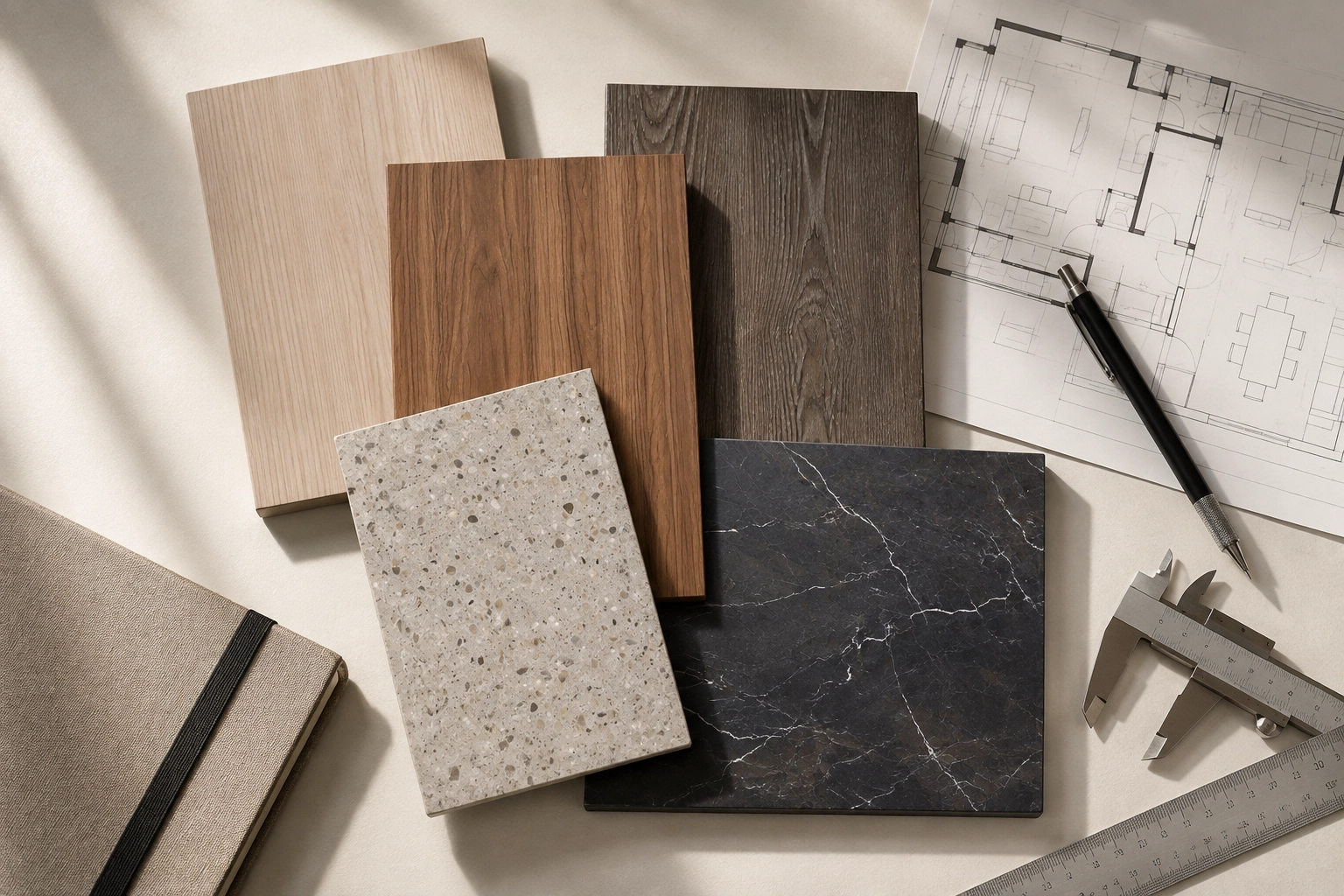
Use physical samples as part of approval
Digital visualization and website photography are useful for comparing alternatives, but they should not replace physical review.
Screen settings, photography and lighting can influence colour perception. A physical sample allows the actual surface character, grain and texture to be reviewed before final approval.
For professional projects, the sample can also become an important communication reference between the designer, client, contractor and fabricator.
Review technical information rather than assumptions
Where a project depends on particular technical or performance requirements, the available documentation for the specific product should be reviewed.
A claim should not be assumed simply because another product in the same general category provides a particular characteristic.
Crownsig’s approach is to connect material presentation with clear supporting information where documentation is available. This allows visual selection and technical review to progress together rather than as separate stages.
A strong specification therefore connects the surface, physical product, intended application, coordinating components and approval sample. Combined with commercial and availability information, that creates a clearer path from design to fabrication.
Stay closer to the world of surfaces
Receive selected Crownsig updates on decorative surfaces, material ideas, design perspectives and new product introductions.
* Add notice about your Privacy Policy here.